
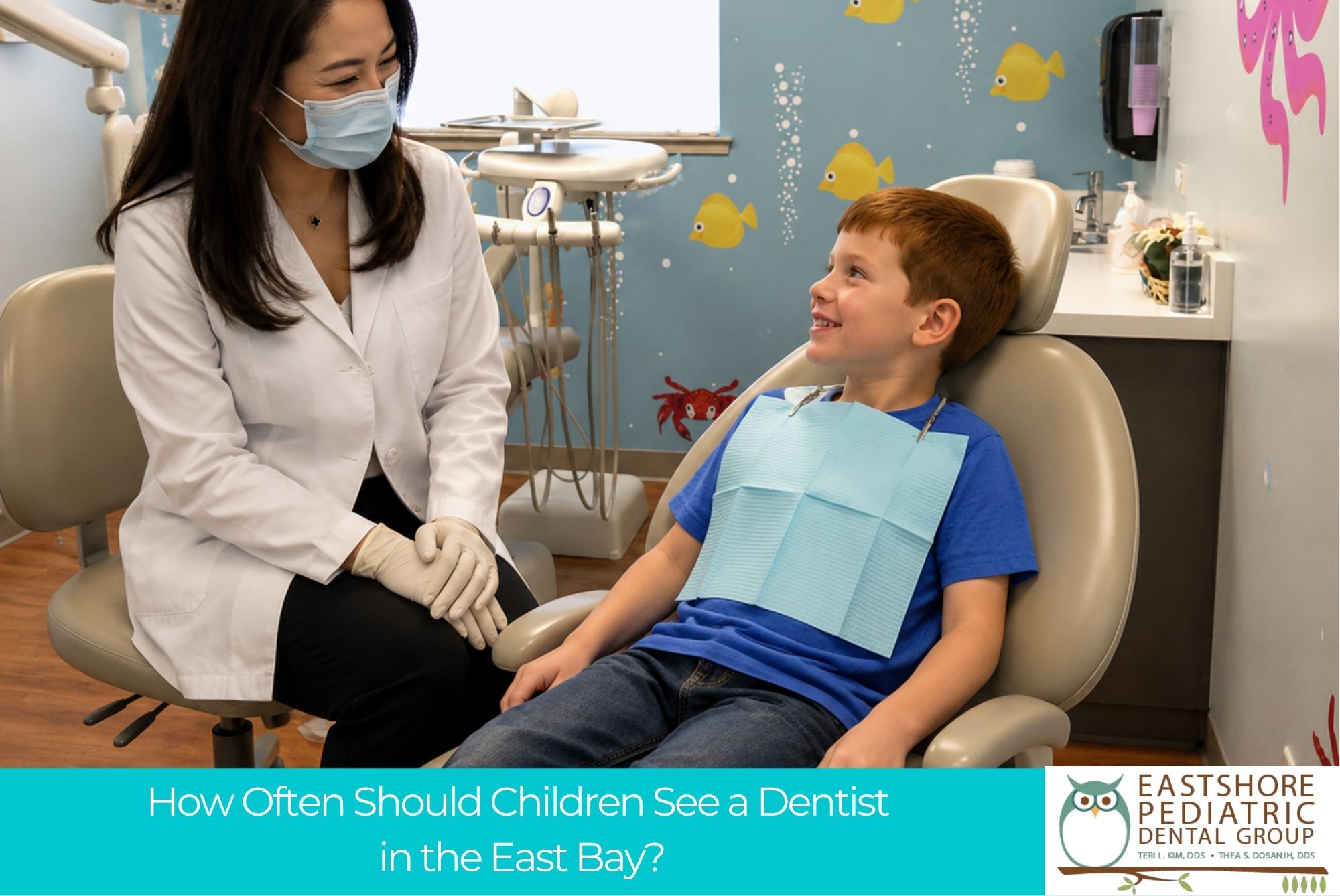
 Keeping your child’s smile healthy requires more than brushing and flossing at home. Regular dental visits are one of the most important parts of preventive pediatric dental care, helping children maintain healthy teeth, healthy gums, and positive oral health habits throughout every stage of development. Many parents ask, “How often should my child see a dentist?” While every child has unique dental needs, most children benefit from professional dental examinations and cleanings every six months.
At Eastshore Pediatric Dental Group, we provide compassionate, evidence-based pediatric dental care for families throughout Pinole, Richmond, San Pablo, Hercules, El Sobrante, Rodeo, Crockett, and communities across the East Bay. Our goal is to prevent dental problems before they become painful or costly while helping children feel comfortable and confident during every visit.
Why Regular Pediatric Dental Visits Matter
Children’s mouths change rapidly as they grow. Baby teeth erupt, permanent teeth begin replacing primary teeth, jaws develop, and oral hygiene habits evolve. Routine dental appointments allow pediatric dentists to monitor these changes while identifying concerns early.
Professional dental visits help:
- Prevent cavities
- Detect early signs of tooth decay
- Monitor jaw and facial growth
- Evaluate bite development
- Identify orthodontic concerns
- Reinforce healthy brushing and flossing habits
- Apply preventive treatments like fluoride and dental sealants
- Reduce dental anxiety through positive experiences
Early intervention often leads to simpler, less invasive treatment and better long-term oral health outcomes.
The American Academy of Pediatric Dentistry Recommendation
Children Should Visit the Dentist Every Six Months
The American Academy of Pediatric Dentistry (AAPD) recommends that most children receive a dental examination and professional cleaning every six months. These routine visits allow dental professionals to monitor oral development while preventing disease before it progresses.
Children who have a higher risk of cavities, enamel defects, orthodontic concerns, or certain medical conditions may require more frequent visits based on their individual needs.
Your pediatric dentist will recommend a personalized schedule that best supports your child’s oral health.
Why Every Six Months?
Cavities Can Develop Quickly
Children’s teeth have thinner enamel than adult teeth, making them more susceptible to cavities. Tooth decay can develop much faster in baby teeth than many parents realize.
Regular exams allow dentists to detect small areas of decay before they require larger fillings, crowns, or extractions.
Professional Cleanings Remove What Brushing Misses
Even children with excellent brushing habits accumulate plaque and tartar in areas that toothbrushes cannot fully reach.
Professional cleanings remove these deposits, reducing the risk of:
- Cavities
- Gingivitis
- Bad breath
- Gum inflammation
Cleanings also leave teeth smooth, making it more difficult for plaque to build up again.
Monitoring Growth and Development
Tracking Baby Teeth and Permanent Teeth
One of the most valuable aspects of routine pediatric dental care is monitoring normal growth.
Your pediatric dentist evaluates:
- Tooth eruption patterns
- Loss of baby teeth
- Development of permanent teeth
- Jaw growth
- Bite alignment
- Space available for incoming teeth
Identifying developmental concerns early often reduces the need for extensive treatment later.
Identifying Orthodontic Concerns Early
Many orthodontic problems become visible long before braces are needed.
Routine exams help identify:
- Crowded teeth
- Crossbites
- Overbites
- Underbites
- Narrow dental arches
- Jaw discrepancies
- Harmful oral habits affecting development
Early orthodontic evaluations can guide jaw growth and simplify future treatment.
Preventive Treatments During Regular Visits
Fluoride Treatments
Professional fluoride strengthens tooth enamel by helping minerals return to areas weakened by acids produced by cavity-causing bacteria.
Fluoride treatments are quick, painless, and highly effective for cavity prevention.
Dental Sealants
Sealants are thin protective coatings placed on the chewing surfaces of molars.
Because deep grooves easily trap food and bacteria, sealants significantly reduce the risk of cavities in these vulnerable areas.
Many children receive sealants shortly after their permanent molars erupt.
Oral Health Education for Families
Each dental visit provides an opportunity to educate both parents and children.
Topics commonly discussed include:
Proper Brushing Techniques
Children benefit from age-appropriate instruction on:
- Brushing twice daily
- Using fluoride toothpaste
- Brushing for two minutes
- Cleaning every tooth surface
Flossing Instruction
As teeth begin touching one another, flossing becomes essential for preventing cavities between teeth.
The dental team demonstrates proper flossing techniques that children and parents can use at home.
Nutrition Counseling
Diet has a significant impact on oral health.
Your pediatric dentist may recommend limiting:
- Sugary beverages
- Sticky candies
- Frequent snacking
- Sports drinks
- Acidic drinks
Instead, families are encouraged to choose tooth-friendly foods such as:
- Cheese
- Yogurt
- Fresh fruits
- Vegetables
- Nuts (when age appropriate)
- Water
Building Positive Dental Experiences
Reducing Dental Anxiety
Children who visit the dentist regularly often become comfortable with dental care from an early age.
Routine preventive visits are typically quick, gentle, and positive.
These pleasant experiences help children develop confidence and reduce fear associated with future dental treatment.
Creating Healthy Habits for Life
Children who learn the importance of preventive dental care often continue those healthy habits into adulthood.
Regular dental visits encourage responsibility, consistency, and lifelong oral health awareness.
Signs Your Child Should Be Seen Before the Next Six-Month Visit
Although routine visits are recommended every six months, parents should schedule an appointment sooner if they notice:
- Tooth pain
- Sensitivity to hot or cold
- Swollen gums
- Bleeding gums
- Broken or chipped teeth
- Dental injuries
- White or brown spots on teeth
- Persistent bad breath
- Loose permanent teeth
- Mouth sores that do not heal
- Difficulty chewing
Prompt evaluation helps prevent more serious dental problems.
Children Who May Need More Frequent Dental Visits
Some children benefit from appointments every three or four months rather than every six months.
Higher-risk children include those who:
- Have frequent cavities
- Wear braces or orthodontic appliances
- Have enamel defects
- Have special healthcare needs
- Experience dry mouth
- Have poor oral hygiene
- Consume high-sugar diets
- Have certain medical conditions affecting oral health
Your pediatric dentist will develop an individualized preventive care schedule.
What Parents Can Do Between Dental Visits
Daily home care remains essential between professional appointments.
Parents should:
- Help younger children brush twice daily
- Supervise brushing until children demonstrate good technique
- Encourage daily flossing
- Offer healthy, low-sugar snacks
- Limit sugary drinks
- Schedule regular dental visits
- Replace toothbrushes every three to four months
- Encourage drinking fluoridated water whenever available
These daily habits work together with routine dental visits to protect growing smiles.
Why Families Throughout the East Bay Choose Eastshore Pediatric Dental Group
At Eastshore Pediatric Dental Group, we believe preventive care is the foundation of lifelong oral health. Our experienced pediatric dental team creates a welcoming environment where children feel safe, respected, and encouraged during every visit.
We provide personalized care for infants, toddlers, children, adolescents, and patients with special healthcare needs. From preventive cleanings and fluoride treatments to cavity prevention and growth monitoring, our focus is helping every child enjoy a healthy smile that lasts a lifetime.
Whether your child is due for a routine cleaning or it’s time for their first dental visit, our team is here to provide compassionate, comprehensive pediatric dental care for families across Pinole and the surrounding East Bay communities.
Frequently Asked Questions
How often should children see a dentist?
Most children should visit the dentist every six months for examinations and professional cleanings. Some children with higher cavity risk or special dental needs may benefit from more frequent visits.
When should my child have their first dental visit?
The American Academy of Pediatric Dentistry recommends scheduling a child’s first dental visit by their first birthday or within six months after the first tooth erupts.
Are baby teeth really that important?
Yes. Baby teeth help children chew, speak clearly, maintain proper spacing for permanent teeth, and support healthy jaw development.
What happens during a routine pediatric dental visit?
A typical visit includes a dental examination, professional cleaning, fluoride treatment when appropriate, oral hygiene instruction, growth assessment, and discussion of any concerns.
Are dental X-rays safe for children?
Yes. Modern digital dental X-rays use very low levels of radiation and are only taken when clinically necessary to diagnose conditions that cannot be seen during a visual examination.
How can I prevent cavities at home?
Brush twice daily with fluoride toothpaste, floss every day, limit sugary snacks and beverages, encourage drinking water, and maintain regular dental visits.
What are dental sealants?
Dental sealants are protective coatings placed on the chewing surfaces of molars to help prevent cavities by sealing deep grooves where bacteria collect.
Does my child need fluoride treatments?
Many children benefit from professional fluoride treatments because they strengthen enamel and help prevent tooth decay. Your pediatric dentist will determine if fluoride treatments are appropriate.
What if my child is afraid of the dentist?
Regular preventive visits help children become familiar with the dental office in a relaxed environment. Pediatric dentists use child-friendly communication and gentle techniques to build trust and reduce anxiety.
Should children continue seeing a pediatric dentist as they grow?
Yes. Pediatric dentists receive specialized training in caring for infants, children, adolescents, and children with special healthcare needs, making them uniquely qualified to support healthy development throughout childhood.
Contact Information
Eastshore Pediatric Dental Group
2000 Appian Way #303
Pinole, CA 94564
Phone: (510) 964-0168
Text Us: (510) 964-0168
Website: https://eastshorepediatricdental.com
Request an Appointment: https://eastshorepediatricdental.com/appointments/