
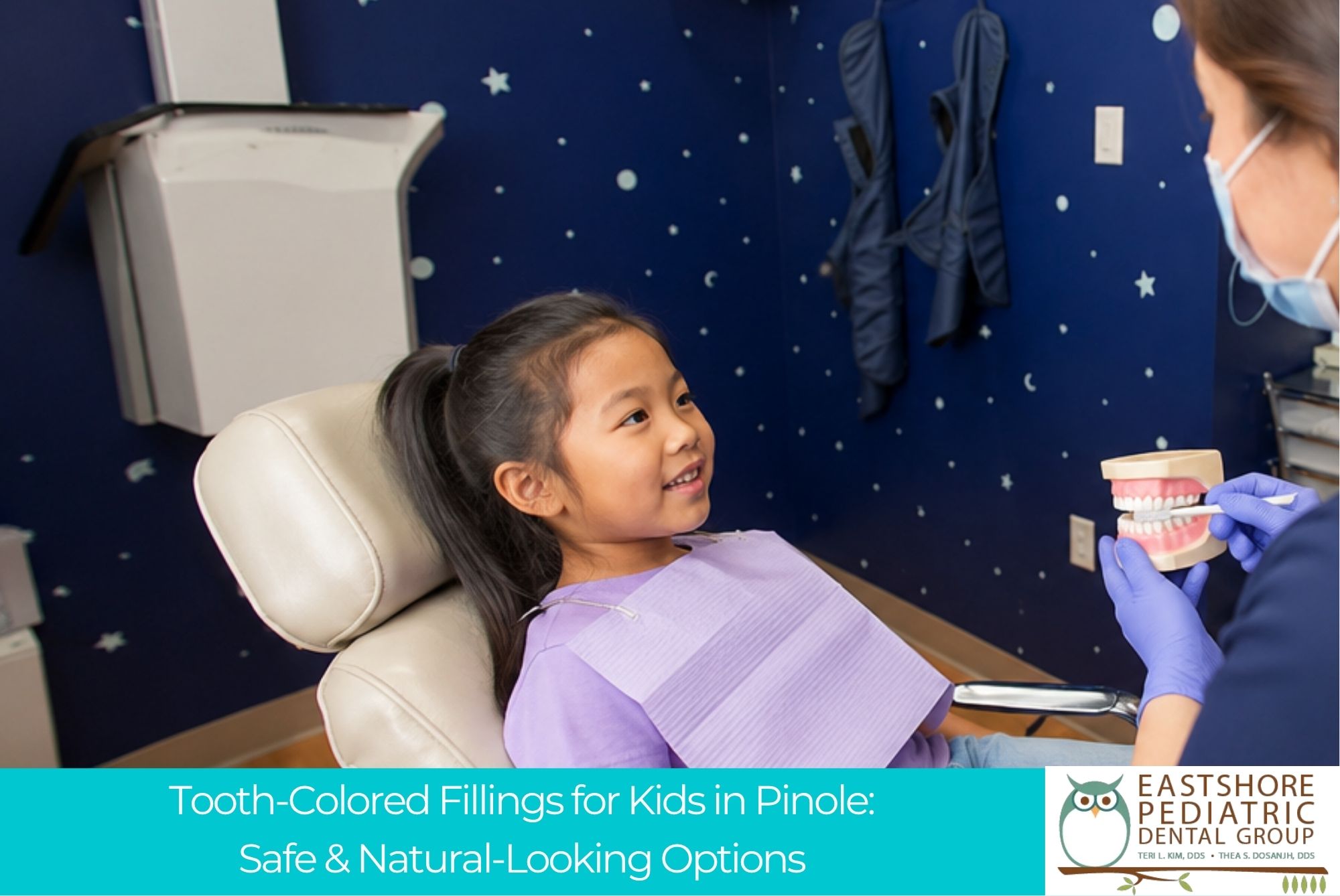
Cavities are one of the most common childhood health concerns, but modern pediatric dentistry offers treatment options that are both highly effective and aesthetically pleasing. Tooth-colored fillings have become the preferred choice for many parents because they restore teeth while maintaining a child’s natural smile. At Eastshore Pediatric Dental Group, we provide safe, durable, and natural-looking tooth-colored fillings that help protect children’s oral health while preserving the appearance and strength of their teeth.
If your child has a cavity, understanding how tooth-colored fillings work and why they are recommended can help you make an informed decision about their dental care.
What Are Tooth-Colored Fillings?
Tooth-colored fillings, also known as composite resin fillings, are restorations designed to repair teeth damaged by decay or minor fractures. Unlike traditional silver amalgam fillings, composite fillings closely match the natural color of your child’s tooth, making them nearly invisible.
Composite resin consists of durable dental materials that bond directly to the tooth structure, allowing dentists to remove less healthy enamel while creating a strong restoration. This conservative approach helps preserve more of your child’s natural tooth.
For pediatric patients, tooth-colored fillings provide both functional and cosmetic advantages that support long-term oral health.
Why Children Get Cavities
Even children who brush regularly can develop cavities. Several factors contribute to tooth decay during childhood.
Frequent Snacking
Sticky snacks, crackers, candy, fruit snacks, and sugary beverages feed cavity-causing bacteria that produce acids capable of weakening tooth enamel.
Developing Brushing Habits
Many younger children have not yet developed the coordination needed to brush thoroughly. Without proper brushing and flossing, plaque can accumulate in hard-to-reach areas.
Deep Grooves in Baby Teeth
Molars often have deep pits and grooves that trap food particles and bacteria, increasing the risk of decay.
Inconsistent Dental Visits
Routine dental exams allow dentists to identify small cavities before they become larger problems requiring more extensive treatment.
Why Tooth-Colored Fillings Are an Excellent Choice for Children
Parents often prefer tooth-colored fillings because they offer several important benefits.
Natural Appearance
Composite fillings are carefully matched to your child’s natural tooth color. Once completed, the restoration blends seamlessly with surrounding teeth.
Children often feel more confident knowing their fillings are virtually invisible when they smile or laugh.
Strong Bonding to the Tooth
Unlike some older filling materials, composite resin chemically bonds to the tooth. This provides excellent support while strengthening the remaining healthy tooth structure.
Conservative Treatment
Because composite fillings bond directly to the tooth, less healthy tooth structure needs to be removed during treatment. Preserving natural enamel helps maintain stronger teeth.
Mercury-Free Material
Many families appreciate that composite fillings contain no mercury and are made from tooth-colored dental resin materials commonly used in modern restorative dentistry.
Comfortable Function
Once polished, composite fillings feel smooth and natural, allowing children to chew comfortably and continue normal daily activities.
Are Tooth-Colored Fillings Safe for Kids?
Yes. Tooth-colored composite fillings have been extensively studied and are considered safe and effective for both baby teeth and permanent teeth when placed by trained dental professionals.
At Eastshore Pediatric Dental Group, every filling material is selected with your child’s safety, comfort, and long-term oral health in mind.
Our pediatric dental team follows strict infection control protocols and evidence-based treatment standards to ensure every procedure is performed safely.
Why Baby Teeth Still Need Fillings
Some parents wonder whether cavities should be treated if baby teeth will eventually fall out. In reality, healthy baby teeth play several essential roles.
Maintaining Proper Spacing
Baby teeth act as natural placeholders for permanent teeth. Losing them too early can allow neighboring teeth to shift, creating crowding and orthodontic concerns.
Supporting Nutrition
Healthy teeth allow children to chew comfortably, encouraging a balanced diet that supports growth and development.
Speech Development
Baby teeth contribute to proper pronunciation and speech development during early childhood.
Preventing Infection
Untreated cavities continue to grow. If decay reaches the nerve, children may experience pain, infection, swelling, or even require more extensive procedures such as pulp therapy or extraction.
Treating cavities early with tooth-colored fillings helps prevent these complications.
What Happens During a Tooth-Colored Filling Appointment?
Parents are often pleasantly surprised by how simple and comfortable the procedure can be.
Step 1: Gentle Examination
Your child’s dentist carefully examines the tooth and may take digital X-rays to determine the extent of the cavity.
Step 2: Comfortable Numbing
If needed, local anesthesia is gently administered to ensure your child remains comfortable throughout the procedure.
Step 3: Removing the Decay
Only the damaged portion of the tooth is removed while preserving as much healthy tooth structure as possible.
Step 4: Placing the Composite Filling
The tooth-colored resin is carefully applied in layers, shaped to match the natural contours of the tooth, and hardened using a specialized curing light.
Step 5: Final Shaping and Polishing
The filling is adjusted to ensure a comfortable bite and polished until it blends naturally with surrounding teeth.
Most children return to school and regular activities shortly after their appointment.
How Long Do Tooth-Colored Fillings Last?
With excellent oral hygiene and regular dental visits, composite fillings can last for many years.
Several factors influence longevity, including:
- Daily brushing and flossing
- Healthy dietary habits
- Limiting sugary snacks and beverages
- Avoiding chewing on hard objects
- Routine professional cleanings and examinations
Although baby teeth naturally exfoliate, preserving them with fillings allows them to remain healthy until they are ready to fall out naturally.
Helping Prevent Future Cavities
Preventing tooth decay is always the best approach.
Brush Twice Every Day
Children should brush with fluoride toothpaste twice daily using age-appropriate techniques.
Floss Daily
Flossing removes plaque between teeth where toothbrushes cannot reach.
Drink More Water
Water helps rinse away food particles and supports healthy saliva production.
Limit Sugary Foods
Reducing sugary snacks and drinks lowers the amount of acid produced by cavity-causing bacteria.
Schedule Routine Dental Visits
Regular checkups allow dentists to detect cavities early while they are smaller and easier to treat.
Consider Dental Sealants
Sealants provide additional protection for molars by sealing deep grooves where cavities commonly develop.
Why Families in Pinole Choose Eastshore Pediatric Dental Group
Choosing a pediatric dentist involves more than finding someone who treats cavities. Families want a dental team that understands children and creates positive experiences.
At Eastshore Pediatric Dental Group, we focus on:
Child-Friendly Care
Our office is designed to help children feel relaxed and comfortable throughout every visit.
Gentle Pediatric Expertise
Our experienced pediatric dental team understands children’s unique developmental needs and uses age-appropriate techniques to reduce anxiety.
Modern Dental Technology
Digital imaging and advanced restorative materials support precise diagnoses and comfortable treatment.
Preventive Philosophy
Our goal is not only treating cavities but helping families prevent future dental problems through education and personalized preventive care.
Frequently Asked Questions
Are tooth-colored fillings better than silver fillings?
Both materials restore cavities effectively, but tooth-colored fillings provide a more natural appearance, bond directly to the tooth, preserve more healthy tooth structure, and are mercury-free.
Can baby teeth receive tooth-colored fillings?
Yes. Composite fillings are commonly used to restore cavities in baby teeth as well as permanent teeth.
Will my child feel pain during the procedure?
The area is numbed before treatment, and pediatric dentists use gentle techniques to maximize comfort. Most children tolerate fillings very well.
How long does a filling appointment take?
Most appointments take between 30 and 60 minutes, depending on the size and number of cavities being treated.
Can children eat after getting a tooth-colored filling?
In most cases, children can eat shortly after treatment once any numbness has worn off. Your dentist will provide specific instructions based on your child’s procedure.
Can cavities come back around fillings?
Yes, if plaque accumulates or oral hygiene is poor, new decay can develop around existing fillings. Good brushing, flossing, and regular dental visits significantly reduce this risk.
Are composite fillings durable enough for back teeth?
Yes. Modern composite materials are designed to withstand normal chewing forces and are routinely used on both front and back teeth.
How can parents tell if a child needs a filling?
Some cavities cause pain or sensitivity, but many produce no symptoms. Regular dental examinations allow dentists to detect cavities before they become painful.
What happens if a cavity is left untreated?
Untreated cavities continue to enlarge and can eventually cause pain, infection, abscesses, damage to permanent teeth, and premature loss of baby teeth.
How can parents help children avoid future fillings?
Consistent brushing, daily flossing, healthy nutrition, fluoride exposure, dental sealants when appropriate, and regular professional cleanings all help reduce cavity risk.
Contact Information
Eastshore Pediatric Dental Group
2000 Appian Way #303
Pinole, CA 94564
Phone: (510) 964-0168
Text Us: (510) 964-0168
Website: https://eastshorepediatricdental.com
Request An Appointment: https://eastshorepediatricdental.com/appointments/