
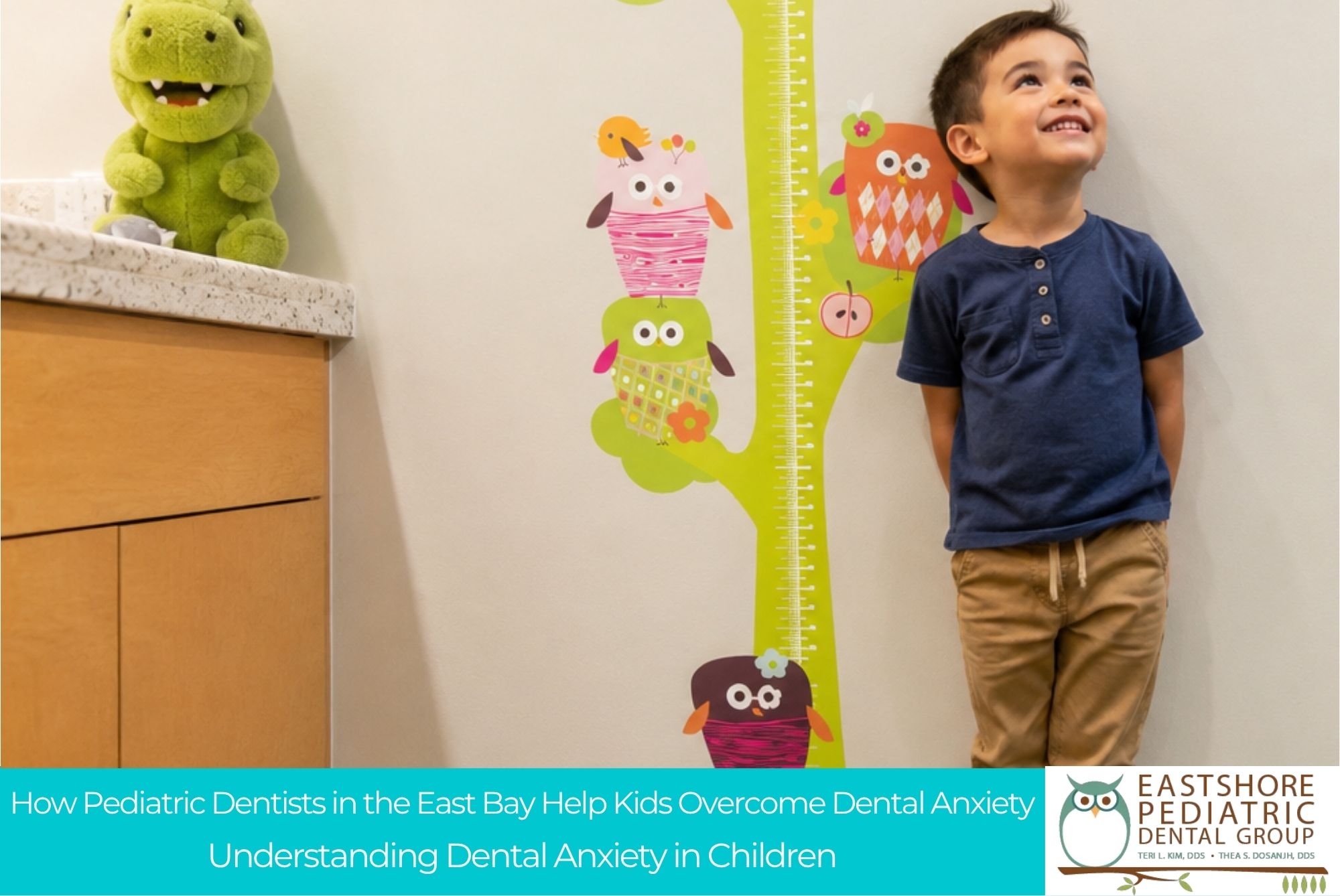
 Understanding Dental Anxiety in Children
For many children, a visit to the dentist can feel intimidating. Unfamiliar sounds, new environments, and fear of discomfort can create anxiety before they even sit in the dental chair. Fortunately, pediatric dentists receive specialized training that goes beyond treating teeth—they understand child development, behavior management, and techniques that help children feel safe and confident throughout every appointment.
At Eastshore Pediatric Dental Group, helping children build positive dental experiences is one of the highest priorities. By creating a welcoming environment and using age-appropriate communication, pediatric dentists help children overcome dental anxiety while promoting lifelong oral health habits.
Whether your child is visiting the dentist for the first time or has experienced fear during previous appointments, the right pediatric dental team can make all the difference.
Why Children Experience Dental Anxiety
Dental anxiety is common among children of all ages. Understanding the underlying causes helps parents and dental professionals address those fears effectively.
Fear of the Unknown
Children who have never visited a dentist often worry because they do not know what will happen. Their imagination may create scenarios that are far scarier than reality.
Previous Negative Experiences
A difficult dental or medical experience can make children nervous about future appointments, even if the circumstances are entirely different.
Sensitivity to Sounds and Sensations
Dental equipment produces unfamiliar noises and vibrations that can seem overwhelming, particularly for younger children or children with sensory sensitivities.
Parental Anxiety
Children often observe and mirror their parents’ emotions. If parents express fear about dental treatment, children may develop similar concerns.
Fear of Pain
Many children associate dentistry with discomfort because of stories from friends, siblings, or media, even though modern pediatric dentistry focuses heavily on gentle, comfortable care.
Why Pediatric Dentists Are Specially Trained to Reduce Anxiety
Pediatric dentists complete additional years of specialized education beyond dental school. Their training focuses on treating infants, children, adolescents, and children with special healthcare needs.
Child Psychology and Behavior Management
Understanding how children think and respond allows pediatric dentists to communicate in ways that reduce fear and increase cooperation.
Instead of overwhelming children with technical explanations, they use simple, friendly language that helps children understand each step.
Creating Positive Associations
Every successful appointment helps build confidence. Children who enjoy early dental visits are significantly more likely to continue receiving routine preventive care throughout life.
The Child-Friendly Environment Makes a Difference
Bright, Welcoming Offices
Pediatric dental offices are intentionally designed with children in mind. Colorful décor, engaging waiting areas, and friendly staff help create an inviting atmosphere.
Caring Team Members
Every member of the dental team plays a role in making children feel comfortable, from the receptionist greeting families to dental assistants offering reassurance throughout treatment.
Smaller Instruments for Smaller Smiles
Pediatric dentists use equipment specifically designed for children’s mouths, making examinations and treatments more comfortable.
Communication Techniques That Reduce Fear
Tell-Show-Do
One of the most effective pediatric behavior guidance techniques is Tell-Show-Do.
The dentist first explains what will happen using simple language.
Next, they demonstrate the instrument or procedure without performing treatment.
Finally, they complete the procedure after the child understands what to expect.
This step-by-step approach removes uncertainty and builds trust.
Positive Reinforcement
Praise encourages children to continue positive behaviors during appointments.
Simple encouragement like “You’re doing a fantastic job opening wide!” helps children feel proud and confident.
Age-Appropriate Language
Rather than using words that may sound frightening, pediatric dentists use child-friendly descriptions.
For example, instead of saying “drill,” they might describe it as a “tooth cleaner” or “special toothbrush” depending on the procedure.
Gentle Preventive Care Reduces Future Anxiety
The fewer dental problems children experience, the fewer complex procedures they typically need.
Regular Exams
Routine dental checkups allow problems to be identified early before they become painful.
Professional Cleanings
Gentle cleanings remove plaque while helping children become comfortable with routine dental care.
Fluoride Treatments
Fluoride strengthens enamel and helps prevent cavities, reducing the likelihood of future restorative procedures.
Dental Sealants
Sealants protect the deep grooves of molars from decay, minimizing the risk of cavities.
Sedation Options for Children with Significant Anxiety
Some children experience severe dental anxiety despite careful behavior guidance. In these situations, pediatric dentists may recommend safe sedation options when clinically appropriate.
Nitrous Oxide (Laughing Gas)
Nitrous oxide helps children relax while remaining awake and responsive.
It works quickly, is carefully monitored, and wears off shortly after treatment.
Moderate Sedation
Certain procedures or children with extensive treatment needs may benefit from moderate sedation under carefully monitored conditions.
Hospital-Based General Anesthesia
For children with extensive dental needs, very young patients, or certain medical conditions, treatment under general anesthesia may be recommended in an appropriate medical setting.
The pediatric dentist discusses every option with parents to determine the safest and most appropriate treatment plan.
Helping Children Prepare Before Their Appointment
Parents play an important role in reducing dental anxiety.
Speak Positively About the Dentist
Avoid using words that imply pain or fear.
Instead, explain that the dentist helps keep teeth healthy and strong.
Read Children’s Books About Dental Visits
Books introduce children to dental visits in a familiar, comforting way.
Practice at Home
Parents can play “dentist” by counting teeth together, allowing children to become comfortable opening their mouths.
Schedule Morning Appointments
Many younger children cooperate better when they are well-rested and appointments occur earlier in the day.
What Parents Should Avoid
Avoid Sharing Negative Stories
Even humorous stories about difficult dental experiences can create unnecessary fear.
Don’t Promise There Will Be No Discomfort
Instead, reassure children that the dental team will help keep them comfortable throughout the visit.
Stay Calm
Children notice parental body language and emotions. Remaining calm helps children feel secure.
The Importance of Early Dental Visits
The American Academy of Pediatric Dentistry recommends scheduling a child’s first dental visit by their first birthday or within six months after the first tooth erupts.
Early visits help children become familiar with the dental office before problems develop. These appointments also allow parents to receive guidance on:
- Proper brushing techniques
- Thumb sucking
- Pacifier use
- Nutrition
- Teething
- Fluoride
- Injury prevention
- Oral development
Starting early often leads to less anxiety later in childhood.
Long-Term Benefits of Positive Dental Experiences
Children who develop trust in their pediatric dentist often experience lifelong benefits.
Better Oral Health
Children who enjoy dental visits are more likely to attend regular preventive appointments.
Reduced Fear as Adults
Positive childhood experiences often carry into adulthood, decreasing dental avoidance.
Healthier Smiles
Routine preventive care reduces cavities, gum disease, and the need for extensive dental treatment.
Increased Confidence
Healthy teeth contribute to confident smiles, clear speech, and improved overall well-being.
Why Families Throughout the East Bay Choose Eastshore Pediatric Dental Group
Families throughout Pinole and the East Bay trust Eastshore Pediatric Dental Group because the practice combines specialized pediatric expertise with compassionate, individualized care.
Every child deserves to feel respected, comfortable, and safe during dental visits. Whether your child is visiting for a routine cleaning, cavity treatment, preventive care, or specialized pediatric dental services, the team focuses on creating positive experiences that encourage healthy habits for life.
Helping children overcome dental anxiety isn’t simply about today’s appointment—it is about building confidence that lasts into adulthood.
Frequently Asked Questions
Is dental anxiety common in children?
Yes. Many children experience some level of anxiety before dental visits. Pediatric dentists are specifically trained to help children feel comfortable.
At what age should my child first visit a pediatric dentist?
The first dental visit should occur by age one or within six months after the first tooth appears.
How do pediatric dentists help nervous children?
They use child-friendly communication, Tell-Show-Do techniques, positive reinforcement, gentle treatment methods, and a welcoming environment to reduce fear.
Can I stay with my child during the appointment?
In many cases, yes. Your pediatric dentist will explain the best approach based on your child’s age, comfort level, and treatment needs.
Is nitrous oxide safe for children?
Yes. When administered by trained pediatric dental professionals, nitrous oxide is considered a safe and effective option for reducing anxiety during many dental procedures.
What if my child cries during the appointment?
Crying is a normal response for some children, especially during early visits. Pediatric dental teams are experienced in helping children calm down while maintaining a positive experience.
How can I prepare my child before the appointment?
Talk positively about the visit, avoid scary words, read children’s books about dentists, and schedule appointments when your child is well-rested.
Can dental anxiety improve over time?
Absolutely. Positive experiences and regular preventive visits often help children become more comfortable with dental care over time.
What if my child has special healthcare needs?
Pediatric dentists receive specialized training to provide compassionate care for children with a wide range of medical, developmental, and behavioral needs.
Why is preventive care important for anxious children?
Preventing cavities reduces the need for more extensive treatment, helping children maintain positive experiences and greater confidence during future dental visits.
Contact Information
Eastshore Pediatric Dental Group
2000 Appian Way #303
Pinole, CA 94564
Phone: (510) 964-0168
Text Us: (510) 964-0168
Website: https://eastshorepediatricdental.com
Request an Appointment: https://eastshorepediatricdental.com/appointments/