
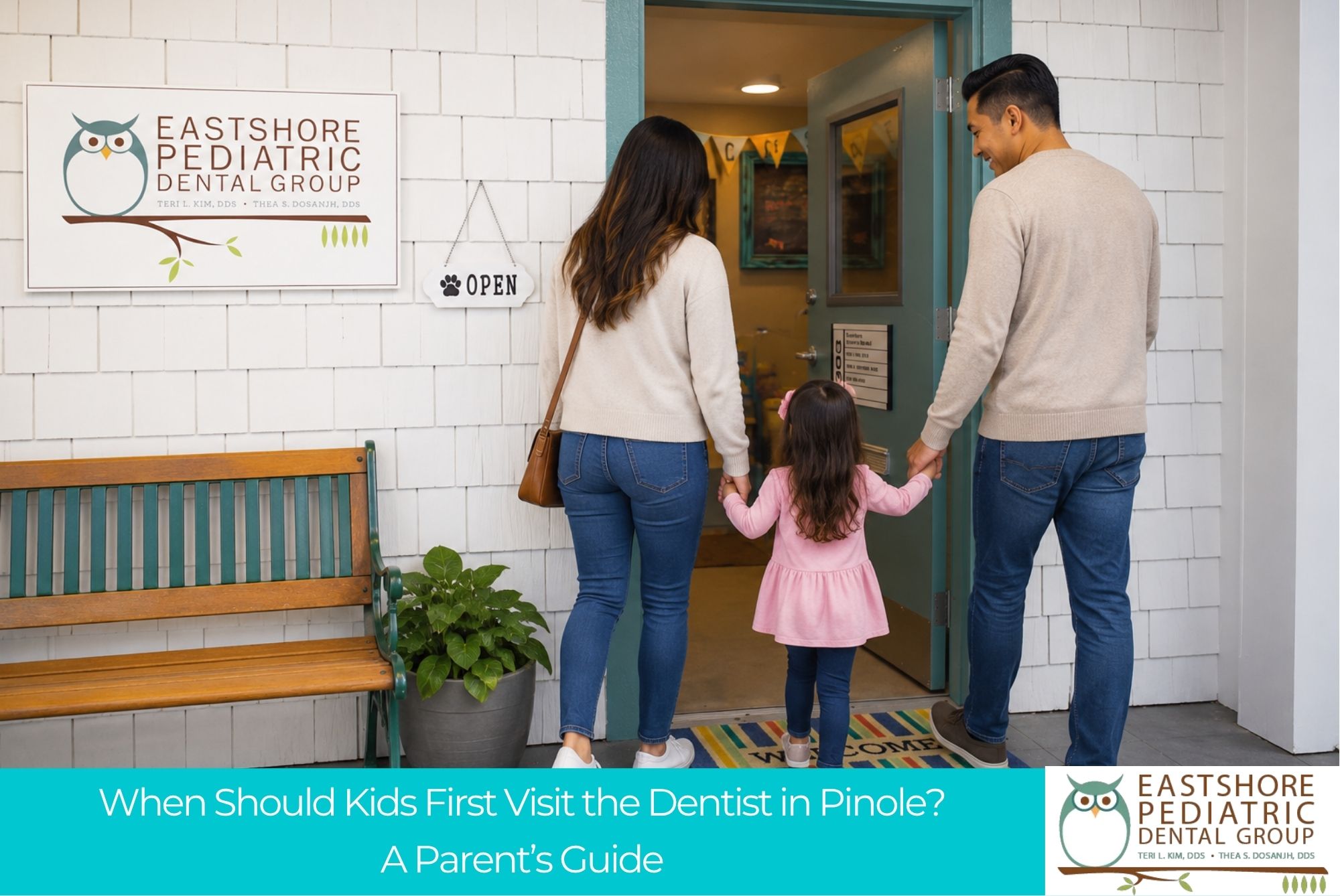
 Every parent wants to give their child the healthiest possible start in life, and that includes establishing excellent oral health habits from infancy. One of the most common questions parents ask is, “When should my child first visit the dentist?” Many families mistakenly believe they should wait until all of their child’s baby teeth have erupted or until preschool. However, pediatric dental experts recommend much earlier dental care.
At Eastshore Pediatric Dental Group, we believe that preventive care begins before problems develop. Early dental visits allow children to become comfortable in a dental setting while helping parents understand how to protect developing smiles. The earlier a child establishes a dental home, the greater the opportunity to prevent cavities, monitor healthy growth, and create positive lifelong attitudes toward oral healthcare.
Whether you’re a first-time parent or welcoming another child into your family, this guide explains exactly when your child should see a pediatric dentist, what to expect during the visit, and why early dental care is one of the best investments you can make in your child’s future.
Why Early Dental Visits Matter
Many people assume baby teeth are temporary and therefore less important than permanent teeth. In reality, primary teeth serve several essential functions that influence a child’s long-term oral and overall health.
Baby teeth help children:
- Learn to chew properly
- Develop clear speech
- Maintain proper facial development
- Guide permanent teeth into their correct positions
- Build healthy eating habits
- Support confidence through a healthy smile
When baby teeth become decayed or are lost too early, children may experience pain, infection, difficulty eating, speech challenges, and orthodontic problems later in life.
Early preventive dental care significantly reduces these risks while helping children develop lifelong healthy habits.
The American Academy of Pediatric Dentistry Recommendation
The American Academy of Pediatric Dentistry (AAPD) recommends that children visit the dentist:
By their first birthday or within six months after the first tooth erupts—whichever comes first.
This recommendation surprises many parents because most children only have a few teeth by age one.
However, early visits are designed primarily for prevention, education, and monitoring—not extensive dental treatment.
Establishing a dental home early allows the pediatric dentist to identify concerns before they become serious problems.
What Is a Dental Home?
A dental home is similar to having a pediatrician for your child’s oral health.
Your pediatric dentist becomes a trusted healthcare partner who provides:
- Routine preventive care
- Growth and development monitoring
- Cavity prevention
- Emergency dental care
- Parent education
- Personalized treatment recommendations
- Long-term oral health planning
Children who establish a dental home early are more likely to receive consistent preventive care throughout childhood.
Why Waiting Too Long Can Cause Problems
Many children do not visit a dentist until they develop pain or visible cavities.
Unfortunately, by this point, treatment is often more extensive and stressful.
Delaying the first dental visit increases the risk of:
- Early childhood cavities
- Dental infections
- Pain while eating
- Emergency dental visits
- Premature tooth loss
- Poor oral hygiene habits
- Dental anxiety
Preventive care is always easier, less expensive, and more comfortable than treating advanced dental disease.
What Happens During the First Dental Visit?
Parents are often pleasantly surprised by how simple and gentle a first pediatric dental appointment can be.
The visit is typically focused on education and helping your child feel comfortable.
The pediatric dentist may:
- Count your child’s teeth
- Examine gums and oral tissues
- Evaluate jaw growth
- Check bite development
- Look for early signs of cavities
- Assess oral habits such as thumb sucking or pacifier use
- Discuss feeding and nutrition
- Demonstrate proper brushing techniques
- Answer parents’ questions
Most first appointments are short, positive, and designed to build trust.
Preparing Your Child for Their First Visit
Parents play an important role in shaping their child’s perception of the dentist.
Simple ways to prepare include:
Talk Positively About the Dentist
Use encouraging language and describe the visit as something exciting rather than something to fear.
Read Children’s Books About Dental Visits
Many age-appropriate books introduce young children to dental care in a fun and reassuring way.
Avoid Scary Words
Avoid using words such as:
- Pain
- Needle
- Shot
- Drill
- Hurt
Instead, allow the pediatric dental team to introduce equipment using child-friendly language.
Schedule Wisely
Choose a time when your child is usually well-rested and happy, such as after a morning nap or breakfast.
Common Oral Health Issues Seen in Young Children
Early visits help identify several common childhood dental concerns.
Baby Bottle Tooth Decay
Frequent exposure to milk, formula, juice, or sweetened drinks—especially at bedtime—can lead to significant tooth decay.
Early Childhood Cavities
Tooth decay remains one of the most common chronic diseases affecting children.
Early detection allows for simpler treatment.
Thumb Sucking and Pacifier Habits
While common during infancy, prolonged habits may affect jaw development and tooth alignment.
Delayed Tooth Eruption
Pediatric dentists monitor eruption patterns and identify developmental concerns if necessary.
Tongue-Tie or Lip-Tie
Some infants experience restricted oral tissues that may affect feeding, speech, or oral development.
Preventing Cavities Starts at Home
Parents are their child’s first oral health teachers.
Healthy habits include:
Clean the Gums Before Teeth Appear
Use a soft, damp washcloth after feedings.
Brush Twice Daily
Once teeth erupt, brush twice daily using a soft infant toothbrush.
Use Fluoride Toothpaste
Current recommendations include:
- Rice-sized smear for children under age three
- Pea-sized amount beginning around age three with supervision
Avoid Sugary Drinks
Water and milk are generally the healthiest beverages for young children.
Limit juice and avoid sugary beverages whenever possible.
Encourage Healthy Snacks
Choose foods that promote healthy teeth, including:
- Cheese
- Yogurt
- Fresh fruits
- Vegetables
- Nuts (when age appropriate)
- Whole grains
How Often Should Children Visit the Dentist?
Most children benefit from dental checkups every six months.
These visits typically include:
- Comprehensive examinations
- Professional cleanings
- Fluoride treatments
- X-rays when appropriate
- Growth monitoring
- Cavity prevention
- Oral hygiene education
Children with higher cavity risk may require more frequent visits based on individual needs.
Why Choose a Pediatric Dentist?
Pediatric dentists complete additional years of specialized training beyond dental school focused exclusively on infants, children, adolescents, and patients with special healthcare needs.
They understand:
- Child psychology
- Behavior guidance
- Growing teeth and jaws
- Pediatric dental diseases
- Children’s dental emergencies
- Preventive care strategies
Their offices are also designed to create a welcoming, child-friendly environment that helps children feel safe and comfortable.
Building a Lifetime of Healthy Smiles
A child’s first dental appointment is about much more than checking teeth. It establishes healthy routines, builds trust with dental professionals, and creates positive experiences that can last a lifetime.
Early preventive care helps reduce the risk of cavities, supports proper oral development, and gives parents the knowledge they need to care for their child’s smile at every stage of growth.
At Eastshore Pediatric Dental Group, we are committed to making every child’s dental experience positive, educational, and comfortable. By establishing a dental home early, families can enjoy peace of mind knowing their child’s oral health is receiving expert care from the very beginning.
Frequently Asked Questions
When should my baby first see a dentist?
Children should have their first dental visit by their first birthday or within six months after their first tooth erupts.
Is it too early if my child only has one or two teeth?
No. Early visits are recommended specifically to monitor healthy development and educate parents before problems occur.
What if my child cries during the appointment?
This is completely normal, especially for infants and toddlers. Pediatric dental teams are specially trained to help children feel comfortable and keep appointments positive.
Are baby teeth really that important?
Yes. Baby teeth help with chewing, speaking, facial development, and guiding permanent teeth into proper position.
How long does the first appointment usually take?
Most first visits last between 20 and 40 minutes, depending on your child’s age and cooperation.
Will my child receive X-rays?
Not always. X-rays are only recommended when necessary to evaluate areas that cannot be seen during a visual examination.
How can I prevent cavities in my toddler?
Brush twice daily with fluoride toothpaste, avoid sugary drinks, encourage healthy snacks, schedule regular dental visits, and follow your pediatric dentist’s recommendations.
Should I brush my baby’s teeth even if they only have one tooth?
Yes. As soon as the first tooth erupts, begin brushing twice daily using a soft toothbrush and a tiny smear of fluoride toothpaste.
What should I do if my child falls and injures a tooth?
Contact your pediatric dentist immediately. Prompt evaluation helps determine whether treatment is needed and can reduce the risk of complications.
Why choose a pediatric dentist instead of a general dentist?
Pediatric dentists receive advanced specialty training in caring for infants, children, adolescents, and children with special healthcare needs. They use age-appropriate techniques that help children feel comfortable while providing expert preventive and restorative care.
Contact Information
Eastshore Pediatric Dental Group
2000 Appian Way #303
Pinole, CA 94564
Phone: (510) 964-0168
Text Us: (510) 964-0168
Website:
https://eastshorepediatricdental.com/
Request an Appointment:
https://eastshorepediatricdental.com/appointments/